

The Difference Between Branding, Marketing, and Advertising — And Why It Matters for Your Small Business
Branding, marketing, and advertising aren't the same thing — and for small business owners in Texas, knowing the difference changes everything.
www.crimsoncreates.com
On occasion, I'll be on a discovery call with a prospect and they'll mention how excited they are for my branding work to drive upticks in their ROI and CPC — then ask whether the branding I do on Facebook is paid or organic.
For a beat, I pause.
Are they asking me to clarify their brand positioning and create graphic designs for a marketing campaign? If so — yes, I can do that. But I ask a clarifying question first: "Are you looking to define your messaging and brand identity, or are you looking for more immediate outreach with the goal of awareness or conversion?"
"Oh, the second one."
This client needs marketing. Not branding.
And honestly? That's a completely understandable mix-up. The three — branding, marketing, and advertising — are used interchangeably all the time, but they are not the same thing. Think of them as sisters; close, deeply connected, each one leaning on the others, but distinctly their own. Let me break it down.
The BMA: Branding, Marketing, and Advertising
Each operates on a different relationship with time — how far something can extend outward to build familiarity, solidity, and the associations people carry with your business.
Branding is the foundation. It is the slow, intentional process of people coming to know, recognize, and trust your business — not because you told them to, but because you showed up consistently enough that they couldn't help it.
A brand is visual, conceptual, verbal, and experiential. It is the colors, the typography, the brand voice, the archetype, the creative direction, and the storytelling — all working together to evoke the same values, the same feeling, and the same promise every time someone encounters you. It is the consistent repetition of what you stand for, how your product or service delivers results, and how it connects your customer to the version of themselves they are working toward.
Branding takes time. And that time is the point. It is what transforms your target audience from strangers into familiar visitors, from visitors into supporters, from supporters into loyalists — and eventually into raving fans who tell others about you without being asked. If you've ever wondered why someone with a massive following commands such fierce devotion, the answer is almost always branding. Not a single campaign. Not one viral post. Branding.
Marketing is the short-term campaign with a specific end goal. It is the plan, the strategy, and the intentional push toward conversion, awareness, or action within a defined window of time. Marketing leverages the brand — but it is not the brand.
Advertising is the creative work that brings the marketing campaign to life. It is the content — designed, written, and orchestrated — to draw attention and create attraction around the campaign's goal. The ad is the action. The marketing is the plan. The brand is what gives both of them meaning.
Case Studies: Branding in the Wild
Let's look at a few brands that have done this exceptionally well — and what small business owners in Texas, and anywhere else building something from the ground up, can learn from them.
Taylor Swift has one of the most devoted fan bases in the world — and it was not built by a single album or a well-timed ad campaign. Her brand archetype is the Everyman — deeply relatable, emotionally honest, and unafraid of vulnerability. She connected with her audience through music that met them exactly where they were: young, feeling unseen, navigating love and heartbreak and growing up. They grew with her. And in return, that feeling of being deeply understood has been reinforced through products, visual eras, PR moments, and meticulously timed marketing campaigns that her audience does not just consume — they participate in. She is now a billionaire. The branding came first. Everything else followed.
Oprah is the Sage archetype — and she has spent decades earning that title. Her brand is built on the pursuit of depth: interviews that push past the surface, a book club rooted in spirituality and inner development, and a personal story of a woman who overcame a painful past and built something extraordinary from it. She has attracted an audience that does not just admire her — they aspire to embody what she represents. That is not marketing. That is a brand so solidly built that it has transcended media, product, and platform entirely.
Rhode Skin, led by Hailey Bieber, arrived at exactly the right cultural moment. The early 2020s brought the clean girl aesthetic — structured, minimal, effortlessly put together — and Rhode became its visual embodiment. The marketing campaigns used food textures to help customers viscerally imagine what the products would feel like on their skin. The phone cases that held her lip treatments became cultural objects. For an audience navigating the chaos and uncertainty of the post-pandemic era, Rhode offered something deeply appealing: control, refinement, and the glazed donut glow. It was a brand that understood its audience's emotional landscape — by talking to them directly, adjusting products according to real feedback — and built an entire world around it.
Apple versus Microsoft is perhaps the most studied brand comparison of all time. Apple did not just sell computers — it created a culture. Under Steve Jobs, the brand became synonymous with creativity, taste, and forward thinking. To own a Mac was to say something about who you were. The creative direction built a societal identity of its own — modern, elevated, a little exclusive. A great brand makes people feel different when they use your product; elevated, future-forward. And yes — it might just make them notice who has a green bubble in the group chat. That is brand culture. And it is extraordinarily powerful.
A Campaign Ends. A Brand Lasts.
An ad runs its course. See it too many times and you get ad fatigue — the message stops landing and starts to irritate. But a brand? A brand builds legacy through time. It is something no budget can buy on a short timeline. It is built only through consistency, intention, and a clear vision of the world you are inviting people into. And when it is built well, it does not just attract customers — it attracts the right people; the ones who believe what you believe and stay because of it.
How I Work With Small Businesses in Texas
When I work with a client — whether they are a small business owner in the Dallas-Fort Worth area, a growing brand across Texas, or an entrepreneur building something entirely new — we start at the root. We explore who they are, what they offer, their history, and their WHY. From there, we build the foundations: their brand archetype, their core values, the principles that matter most to them and the people they serve. That foundation informs everything; the creative direction, the visual identity, the color system, the typography, the textures, the narrative, and the world we are building together.
Then we bring it to life — a logo that means something, a color palette that evokes the right feeling, a brand voice that sounds like them at their clearest and most confident. All of it designed to draw in the right audience and build the kind of connection that lasts long after a campaign ends.
Branding is my favorite work because it is, at its core, world-building. And the world we are building belongs to a small business owner who had a vision for how to make things better — for their clients, their community, and themselves. I get to take that vision and give it form. I get to use everything I know about brand strategy and graphic design to help them step into it fully.
They deserve that. Every single one of them deserves a chance to thrive.
If you are a small business owner in Texas — or anywhere — looking to build something that lasts: real connection, real recognition, real loyalty — I'd love to work with you. Let's connect.
Warmly,
Alexandra Phoenix
Owner, Brand Strategist & Designer
Crimson Creates Studio
www.crimsoncreates.com
What Nobody Tells You About Building a Creative Life You Actually Love
Nobody hands you a blueprint for building a creative life that actually fits. You figure it out through the work, the burnout, the comebacks, and the quiet moments when you realize you're exactly where you're supposed to be.
In this post, Alexandra Phoenix — freelance designer, visual artist, and founder of Crimson Creates Studio in Texas — shares the three principles that have shaped her creative practice and entrepreneurial journey: excellence, pattern recognition, and silliness. She also gets honest about creative burnout, what it took to come back from it, and what's currently happening in the studio — from web design motion experiments to a painting she abandoned in 2022 and finally finished in 2026.
If you're a creative entrepreneur, a small business owner, or anyone trying to build something meaningful on your own terms — this one's for you.
Read the full post at crimsoncreates.com
Far from perfect, I believe the end goal of a creative person is to play, to practice, and, most importantly, to excel. Whether you're a freelance designer, a working artist, or a creative entrepreneur, these principles have shaped my journey and my studio practice.
I firmly believe in the avid pursuit of excellence, of the personal and vocational advantage of pattern recognition, and of simple silliness. These are my core ideas as a creative professional and small business owner, and to break it down further:
Excellence means that you deeply understand your craft. The materials, how they work, why they work, and your process to working with them. For a designer or visual artist, this means knowing your tools — from traditional paint and canvas to modern web design platforms — deeply enough to bend them to your vision.
Pattern Recognition means you're able to see repeated cycles of interest, happenings, or occurrences and link them to causes or effects that seem to connect. This is a gift for yourself because it helps in all arenas of life, from simply recognizing you're being manipulated by someone to understanding what materials lead to what result. It is an evergreen personal gift to oneself — and for creative entrepreneurs, it is an invaluable business skill.
Silliness allows the joy of your craft and the deep personal WHY to flourish. This silliness keeps things fresh, meaning you'll always be at the edge of exploration to uncover what else can be done in your craft or in your life. And silliness keeps you feeling alive.
All of these are evergreen gifts to oneself — and together, they form the foundation of a sustainable creative career.
What Does It Mean to Pursue Your Highest Creative Life?
It means your life will be reaching for the "highest version of your life experiences." In my experience, even fear won't get in your way - but it will be a companion. All you will do is put fear in the passenger seat — you in the driver's seat, with the love of excellence, pattern recognition, and silliness in your heart, will move forward.
Ask yourself: What else are you going to do with your life? What is that little voice in your head so afraid of?
Truly, ask it.
Truly let it expel all its fears and worries, in a journal or in meditation/prayer.
Then ask it: "What else are we going to do? Will we be able to give our full focus to seek to be exceptional in this, while able to be in joy while doing these things? What about the hard days — can we see ourselves feeling this was worth it even on the worst day?"
If the answer is no… then I can't see how someone can compete against the more passionate person who is obsessed and pushes forward regardless of trials and successes — they just want to be exceptional.
My Creative and Entrepreneurial Journey
As a Texas-based freelance designer and visual artist, I wake up wanting to design, to paint, to create, to move my body. I've been actively pursuing entrepreneurship since 2019, freelancing on-and-off since being a high school design intern, and I'm still here. In between has been day jobs funding my dreams.
I'm grateful to have my studio, to serve local Texas businesses, and to have the time to connect with business decision makers and creative entrepreneurs in my community. The fact that I can give back because I am obsessed with providing the best means a lot to me.
And when I meet other passionate people who aim for total excellence, I know the service they provide — and beyond that, the life they lead — must be amazing and true to them.
When the Passion Fades: Creative Burnout Is Real
Sometimes the passion can fade. Sometimes the love for things goes away. A couple of years ago this happened to me; I thought I was empty and dried of creativity. My creative block hit my heart and I had no love left for my work. But it was only a season — a long season. (I'll be writing soon about how to get your love for your passion back — stay tuned on the blog.)
Creative burnout is one of the most common struggles for artists, designers, and entrepreneurs. And recovery is possible.
A Case Study in Excellence: Alysa Liu
For example, let's briefly look at Alysa Liu, the gold medalist figure skater. She retired at 16 from burnout, gave herself a normal life, then came back to simply enjoy her craft. As a result, she won gold.
I believe this is what a master of one's craft looks like — exceptionalism “perfected”, knowing her process through pattern recognition of what works, and simply enjoying herself out there. The whole world felt this.
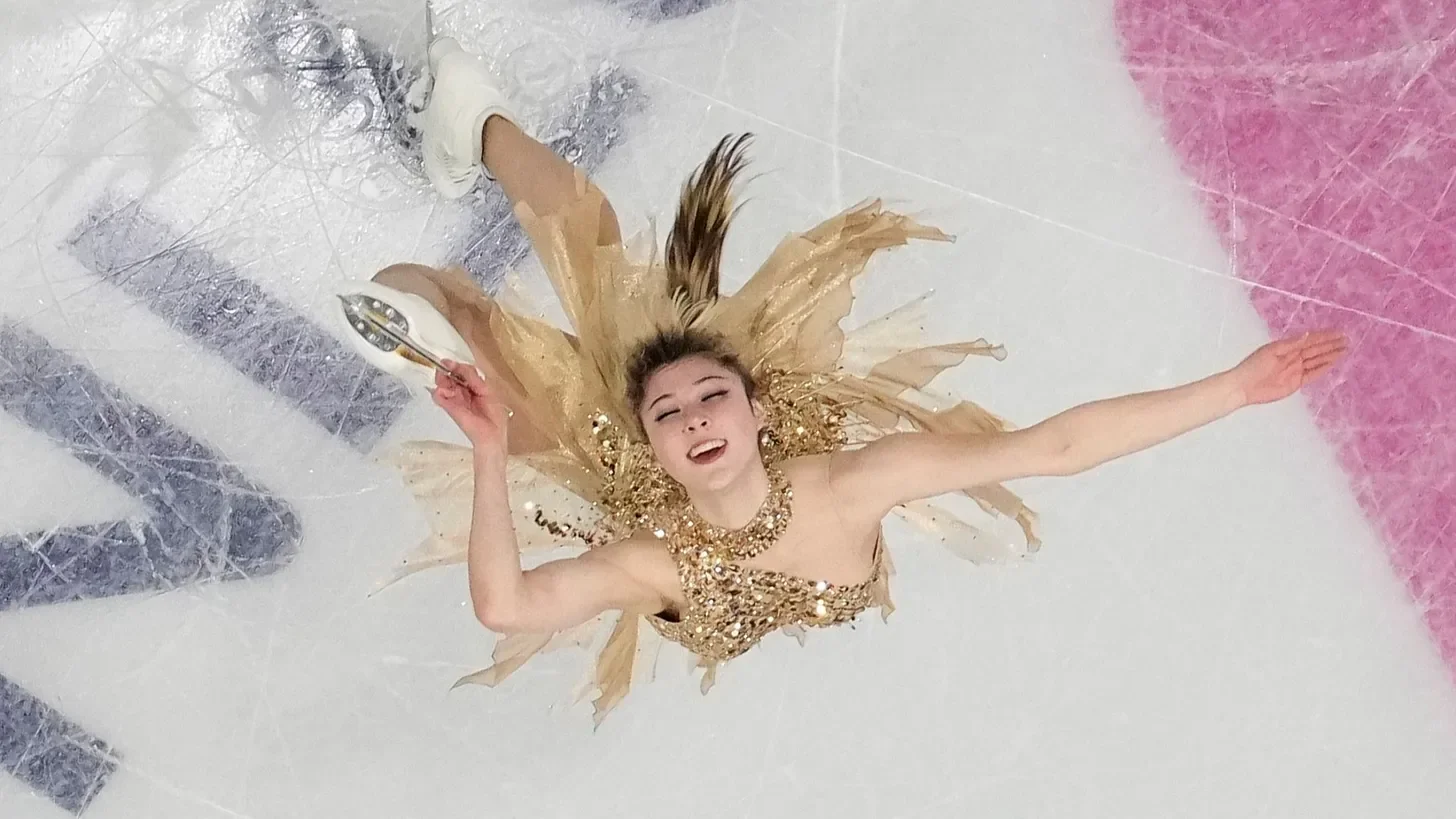
This is a serious power. Even if she hadn't won gold, she was exceedingly more impactful than her peers regardless. People deserve to see more of this — in sports, in business, and in art.
How to Apply This Framework to Your Own Creative Life
Please do ask yourself those questions — I did so many times and my life is the most aligned it's ever been.
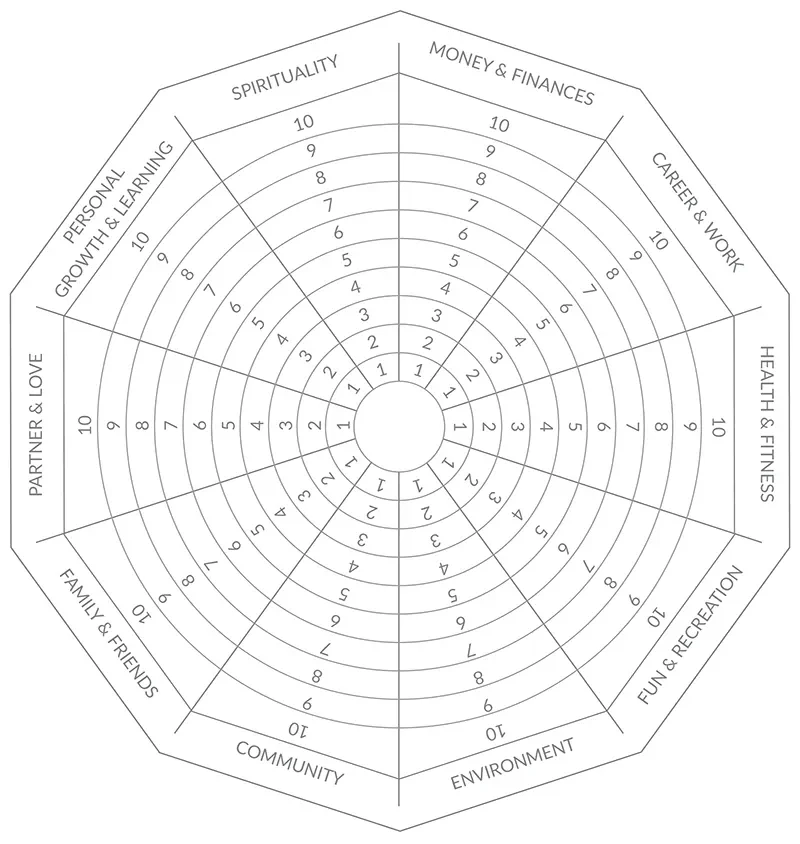
I would also encourage you to take this framework and review the different areas of your life, rate them, and see how you can improve these 3 aspects. Find or read about people who have the relationship you dream of, who have the career you love, who have the health or spiritual depth or community connection you desire. These can be different people, and you can be the beautiful amalgamation of it all. I know I am, and there's still so much more to do.
What I've Been Creating in the Studio Lately
With all of that being said, here are some of the projects I've been working on as a freelance designer and artist — and it has been so fun!
Recent studio work and creative explorations:
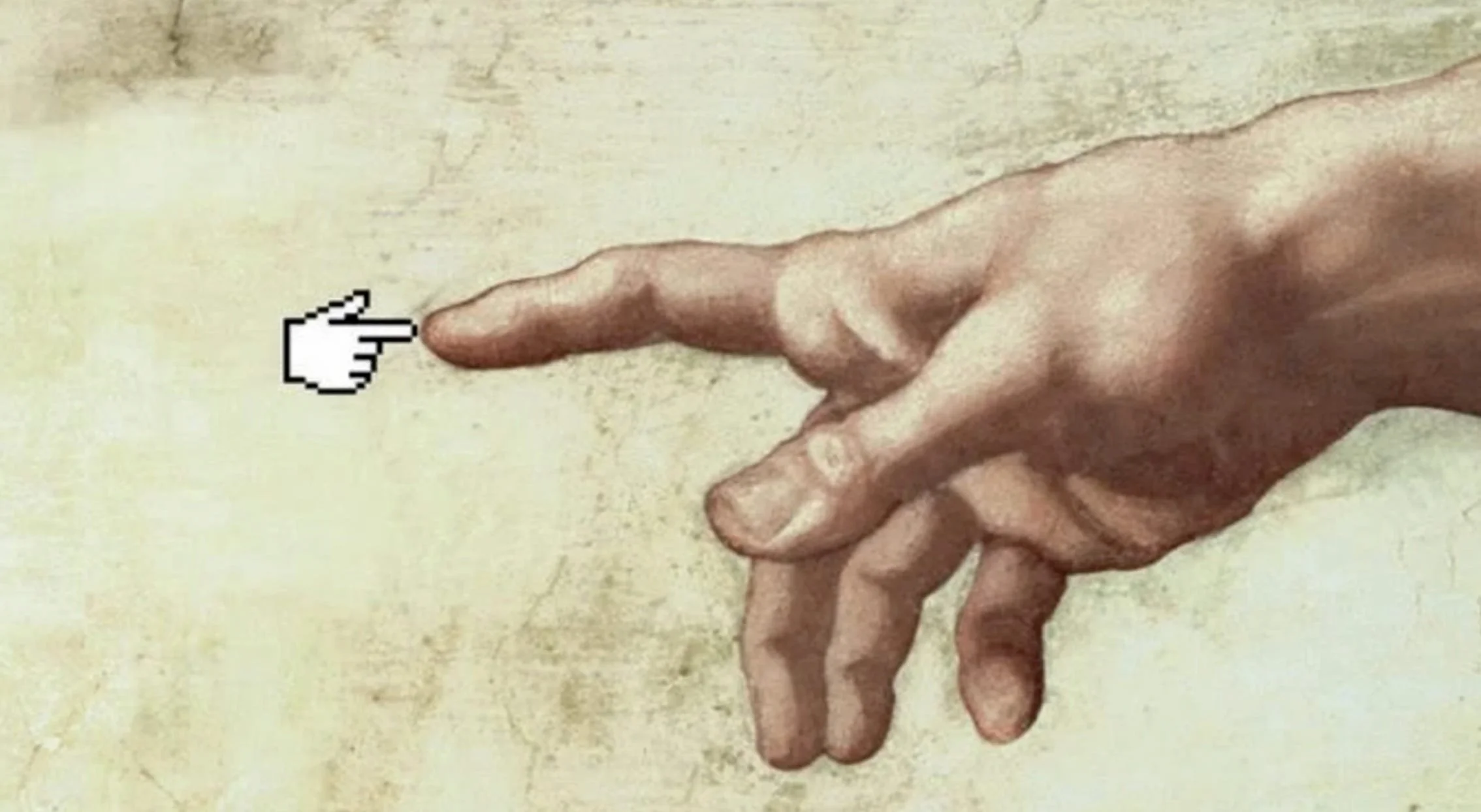
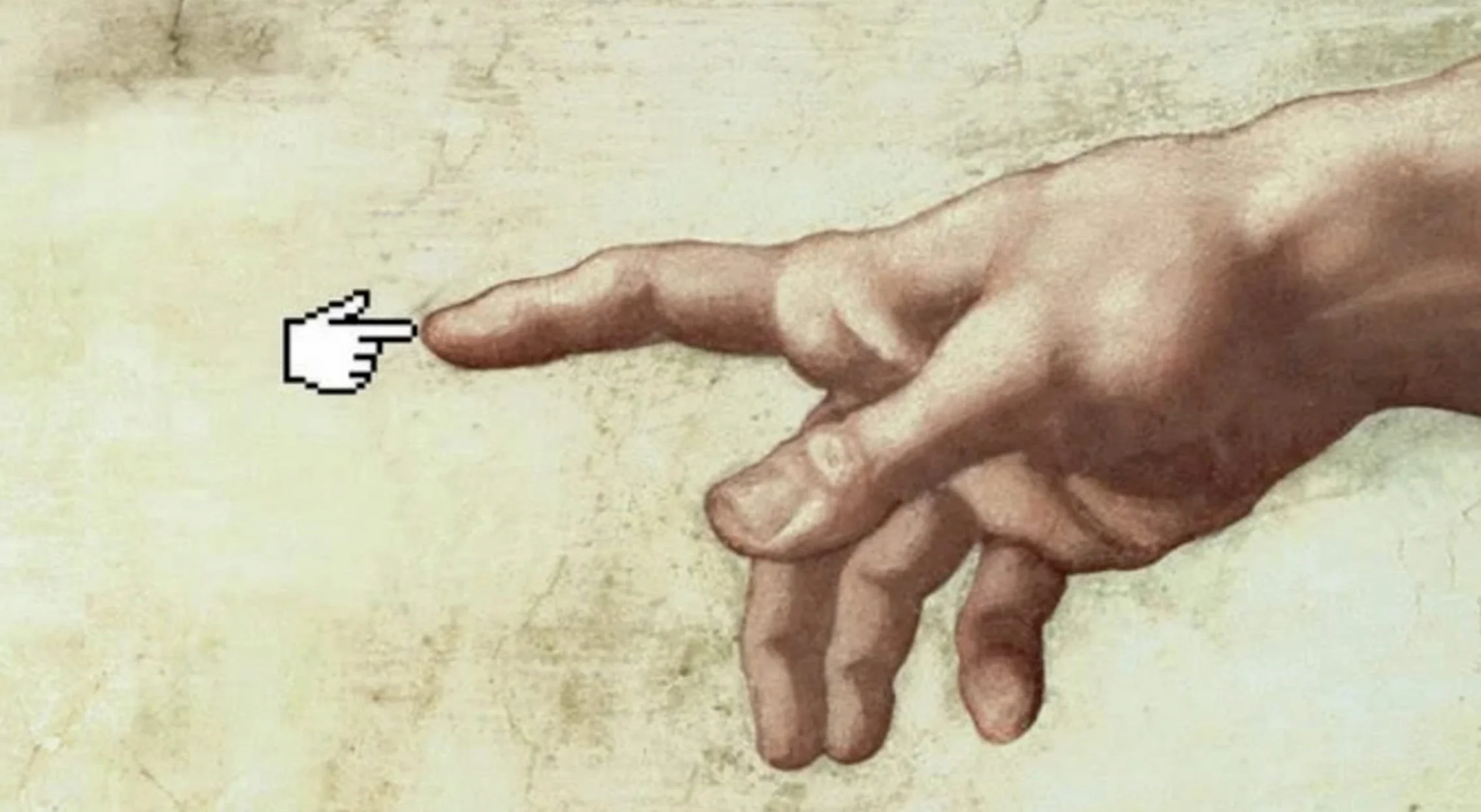
Web Design & Motion Effects I've been playing with Unicorn Studio for web design motion effects — interactive elements that follow your mouse cursor! I've also been integrating AI tools into my current web design process to bring the most innovative design solutions to my clients. My goal is to always bring the best of design and branding to Texas small businesses and beyond, so I must always keep learning and playing.
2. Returning to a Painting I Abandoned in 2022I was pushing my skills then to really mold the form, and I couldn't at the time. I walked away frustrated in my home studio in Newark, NJ — only to find it again in my boxes here in Texas. My skills have grown since then, so I happily breezed through this while keeping a lot of my original mark makings. This piece truly holds my development-in-progress from 2022 me and 2026 me — a true collaboration and appreciation of how far I've come as a visual artist.
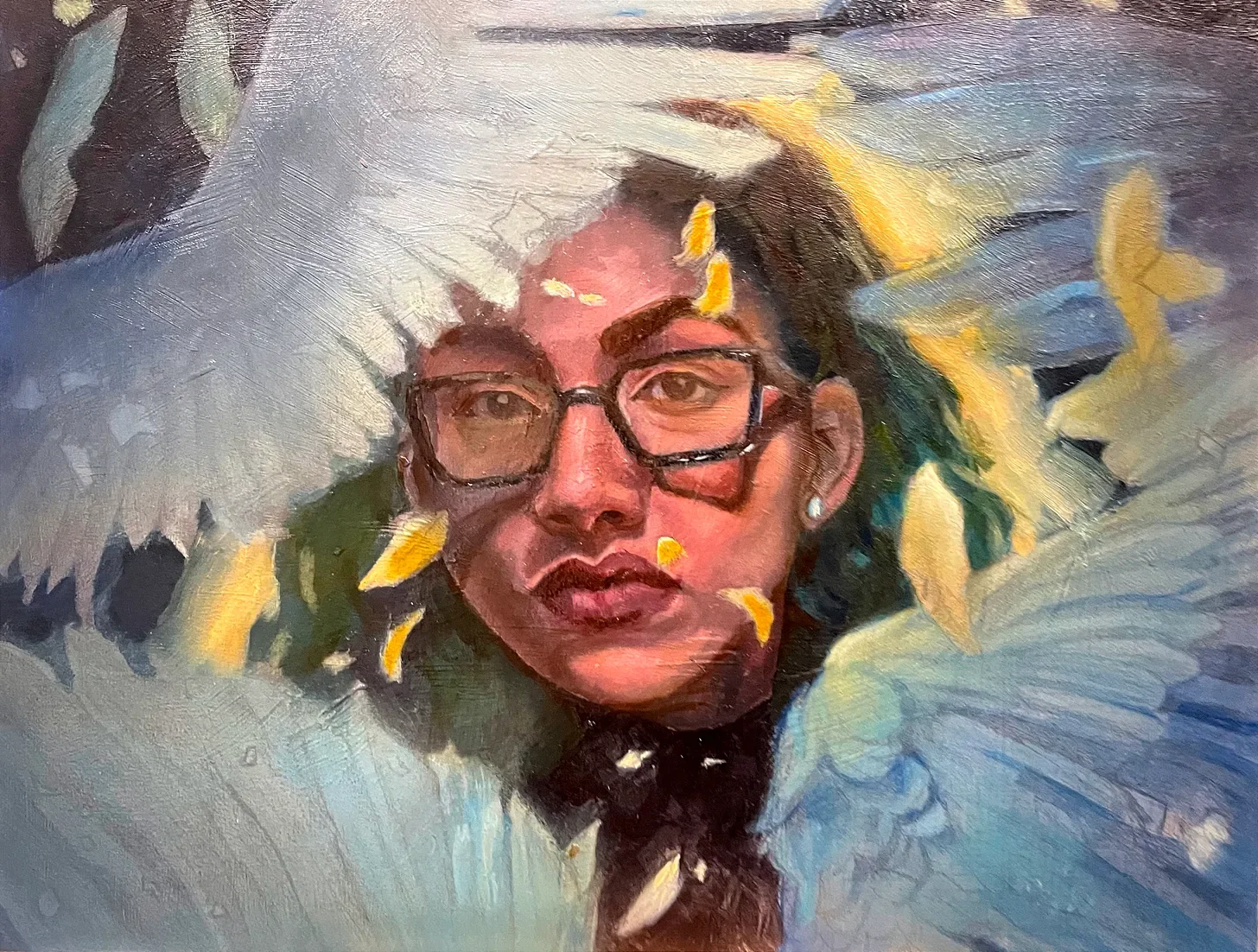
Wings of a Feather, started in 2022, finished in 2026
3. Mini Paintings for a Baby Shower I can't share these just yet because it's a surprise — but they'll be updated on my art portfolio soon. Check back at crimsoncreates.com/art to see them!
Life Beyond the Studio
I've taken up journaling and decided social media is an energy suck… again. I've also been connecting with so many local business owners and decision makers in my community — and so many of them are incredibly cool. A book club may be on the horizon, and I have a new art buddy. Truly exciting things ahead.
Let's Connect
So, what are you working on that has moved the needle for your brand, your creativity, or just for yourself? Drop a comment below — I'd love to hear from you.
And if you're a small business owner looking for branding, graphic design, or custom art in Texas, let's talk. Visit crimsoncreates.com to learn more about working together.
Crimson Creates is a boutique creative studio offering graphic design, branding, web design, and fine art services to small businesses and entrepreneurs. Based in Texas.
Brand Shift Analysis: From Clean Girl to Messy Humanity
The Clean Girl aesthetic didn't just fade — it exhausted itself. And what's rising in its place says a lot about where branding, culture, and consumer trust are heading next.
In this post, Alexandra Phoenix — brand strategist, graphic designer, and founder of Crimson Creates Studio in Texas — traces the cultural shift from polished, performative branding toward something messier, warmer, and more human. From Rhode's sale to e.l.f. Cosmetics, to Hermès' hand-animated campaigns, to the quiet cultural split happening around AI-generated design — this is a brand shift analysis worth sitting with.
If you're a small business owner trying to figure out how your brand should show up in 2026 and beyond, this one gives you a framework for thinking it through.
Read the full post at crimsoncreates.com
Remember when the Clean Girl aesthetic was everywhere in 2024–2025?
Hailey Bieber became the face of that aspiration, and Rhode rode the wave all the way to its eventual sale to e.l.f. Cosmetics in May 2025 — a brand valued at nearly one billion dollars. That sale feels like a cultural placeholder: a marker for a shift that had already quietly begun.
Clean Girl makeup signaled effortless perfection — the sleek bun, the minimal makeup, the Pilates routine, the curated meal. Effortlessness that required immense effort. At some point, that level of sustained performance doesn’t just fracture. It exhausts.
This is part of a broader cultural burnout.
The neutral, polished visual language that dominated branding for millennial and Gen Z audiences was designed to feel both relatable and aspirational. But over time, what was meant to feel effortless began to feel calculated. And when a visual language saturates the market long enough — when it becomes indistinguishable across industries — it gets placed into a box. Of a time. Of an era.
This is how we can instantly identify styles from the ‘70s or ‘80s, or distinguish Bauhaus from Art Deco. Over-saturation eventually creates clarity — but only after the burnout has passed. We’re in that passage now.
Enter: the rise of “messy” branding.
As AI-generated design and marketing accelerate, a quiet cultural schism is forming. People seem to be splitting in their response: some are overwhelmed and repelled, actively seeking humanity, texture, and analog experience. Others are enthusiastically embracing automation and optimization. These aren’t just aesthetic preferences — they’re becoming cultural and class identifiers.
Look at Hermès. Their hand-animated campaigns. Their illustrated website. The deliberate emphasis on time, craft, patience, and human touch. Handmade has become the new signal of luxury. Human-drawn. Human-written. Human-considered.
There’s a particular power in that contrast. When machines produce flawless outputs at scale, human imperfection becomes rare — and therefore valuable. We’re not just witnessing a design shift. We’re watching AI quietly reframe what “premium” means.
And culturally, people aren’t rejecting AI by destroying it. They’re mocking it. AI slop. Satire. Parody. Humor aimed at perfection itself. When something becomes ubiquitous and automated, irreverence becomes the natural response.
Visually, this shows up in who we’re collectively looking toward.
If Hailey Bieber symbolized Clean Girl, Charli XCX feels like the icon of what’s emerging — messy, expressive, imperfect, still intentional. Looser hair. Smudged makeup. Not careless, but less constrained. These two figures represent more than personal style. They reflect an entire shift in cultural values: from performed perfection to expressed humanity.
We aren’t rejecting beauty. We’re rejecting the performance of it.
So as you think about your brand moving into 2026 and beyond, consider this: how does your brand allow for humanity?
Even elevated, luxury brands can lead with warmth. Handwritten notes. Personal touches. White-glove care that feels felt, not automated. The decline in social media use points to the same undercurrent — people are hungry for presence and genuine connection, not more optimized content.
Perfection is no longer the flex. Presence is.
I find myself wondering whether hyper-AI adoption will solidify into its own cultural class — and whether, in the hierarchy people are quietly building, humanity has already claimed the top rung.
at do you think? And how are you choosing to balance AI tools with human touch in your branding and communication?
For my part, I’ve chosen to learn the AI tools — to understand them, work with them, and add them to my repertoire. But I keep returning to the basics: designing from scratch/basic shapes, painting, reading, touching grass, and living life. The analog anchors that keep my work human and gives me inspiration for further work.
Stay well & healthy,
Alexandra Phoenix
-
P.S. If you'd like a second set of eyes on your brand, I offer a complimentary brand audit. You're welcome to connect just to say hi!